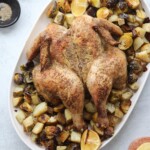
Spatchcock Chicken Recipe
Servings 6 servings
Ingredients
- 4 pounds whole bone-in chicken 3½ – 4 pounds
- 4 tablespoons olive oil divided
- 1 teaspoon garlic powder
- 1 teaspoon dried oregano
- 2 cups brussels sprouts washed and trimmed
- 2 pounds russet potatoes about 3 medium potatoes
- 1 lemon
- ½ teaspoon sea salt
- ¼ teaspoon black pepper
Instructions
Butterfly the Chicken
- Place the 4 pounds whole bone-in chicken with the breasts facing up. Using sharp kitchen shears, cut along one side of the backbone from end to end. Cut along the other side of the backbone, completely removing about about 1-inch wide portion of the spine.
- Turn the chicken over and use the palm of your hands to press down firmly on the bird until you hear the breast bone crack. This will flatten the bird. Optionally, you can tuck the wings.
Marinate
- Lay the spatchcocked chicken on a parchment or foil lined sheet pan. Pat it dry with a few paper towels, then rub it all over with 2 tablespoons olive oil and the spices (1 teaspoon garlic powder and 1 teaspoon dried oregano), using your fingers to rub it under the skin too.
- Let the chicken marinate in the seasonings for at least 30 minutes.
Prepare the Dish
- Preheat the oven to 450°F (230°C).
- Meanwhile, wash the vegetables. Trim and remove any large stems from the 2 cups brussels sprouts, then cut each sprout in half. Cut the 2 pounds russet potatoes into quarters. Cut 1 lemon into quarters.
- Transfer the vegetables to a bowl, and toss with the remaining 2 tablespoons olive oil; season them lightly with ½ teaspoon sea salt and ¼ teaspoon black pepper.
- Spread the vegetables and lemon pieces into an even layer on the sheet pan.
Roast
- Set the sheet pan in the preheated oven and roast for 40 minutes, using a meat thermometer to ensure the internal temperature has reached 163℉ at the thickest part of the thigh (*see notes, below).
- Allow the chicken to rest for 5-10 minutes before slicing.
Notes
- Chicken is safe to eat when the internal temperature reaches 165°F. at the thickest portion of the thigh. When taking the internal temperature, be sure the probe isn’t touching any bones.
- To ensure juicy meat, remove the roasted chicken when the internal temperature is 163°F. As the meat rests for 5 minutes, the internal temperature will increase another 2-3 degrees.
- To store leftovers: Transfer to an airtight container and keep in the refrigerator for 3-4 days. Alternately, you can freeze leftover chicken for use within 4 months, per USDA.
- Get the skin really dry. Take an extra minute to pat away as much surface moisture as you can before adding the oil and seasonings. It makes such a difference when you want that skin nice and crisp.
- Save that backbone. I always think it's worth hanging onto instead of letting it go to waste. Stick it in the freezer with your other chicken bones and scraps until you're ready to make homemade stock.
Nutrition
Serving: 0.25 chicken | Calories: 513kcal | Carbohydrates: 32g | Protein: 33g | Fat: 28g | Saturated Fat: 7g | Polyunsaturated Fat: 6g | Monounsaturated Fat: 13g | Trans Fat: 0.1g | Cholesterol: 116mg | Sodium: 317mg | Potassium: 1072mg | Fiber: 4g | Sugar: 2g | Vitamin A: 449IU | Vitamin C: 46mg | Calcium: 60mg | Iron: 3mg
